 Poet, critic, short story writer, and painter, Jose Garcia Villa was a consummate artist in poetry and in person as well. At parties given him by friends and admirers whenever he came home for a brief visit, things memorable usually happened. Take that scene many years ago at the home of the late Federico Mangahas, a close friend of Villa's. The poet, resplendent in his shiny attire, his belt an ordinary knotted cow's rope, stood at a corner talking with a young woman. Someone in the crowd remarked: "What's the idea wearing a belt like that?" No answer. Only the faint laughter of a woman was heard. Or was it a giggle perhaps? Then there was one evening, with few people around, when he sat down Buddha-like on a semi-marble bench under Dalupan Hall at UE waiting for somebody. That was the year he came home from America to receive a doctor's degree, honoris causa, from FEU. Somebody asked: "What are you doing?" He looked up slowly and answered bemused: "I am just catching up trying to be immoral." Sounded something like that. There was only murmuring among the crowd. They were not sure whether the man was joking or serious. They were awed to learn that he was the famed Jose Garcia Villa. What did the people remember? The Buddha-like posture? Or what he said?
Here is a partial list of his published books:
- Philippine Short Stories, best 25 stories of 1928 (1929)
- Footnote to Youth, short stories (1933)
- Many Voices, poems (1939)
- Poems (1941)
- Have Come Am Here, poems ((1941)
- Selected Poems and New (1942)
- A Doveglion Book of Philippine Poetry (1962)
Nick Joaquin
Poet, fictionist, essayist, biographer, playwright, and National Artist, decided to quit after three years of secondary education at the Mapa High School. Classroom work simply bored him. He thought his teachers didn't know enough. He discovered that he could learn more by reading books on his own, and his father's library had many of the books he cared to read. He read all the fiction he could lay his hands on, plus the lives of saints, medieval and ancient history, the poems of Walter de la Mare and Ruben Dario. He knew his Bible from Genesis to Revelations. Of him actress-professor Sarah K. Joaquin once wrote: "Nick is so modest, so humble, so unassuming . . .his chief fault is his rabid and insane love for books. He likes long walks and wornout shoes. Before Intramuros was burned down, he used to make the rounds of the churches when he did not have anything to do or any place to go. Except when his work interferes, he receives daily communion." He doesn't like fish, sports, and dressing up. He is a bookworm with a gift of total recall.
The following are Joaquin's published books:
- Prose and Poems (1952)
The Woman Who Had Two Navels (1961)
Selected Stories (1962)
La Naval de Manila and Other Essays (1964)
The Portrait of the Artist as Filipino (1966)
Tropical Gothic (1972)
The Complete Poems and Plays of Jose Rizal (1976)
Reportage on Crime (1977)
Reportage on Lovers (1977)
Nora Aunor and Other Profiles (1977)
Ronnie Poe and Other Silhouettes (1977)
Amalia Fuentes and Other Etchings (1977)
Gloria Diaz and Other Delineations (1977)
Doveglion and Other Cameos (1977)
A Question of Heroes (1977)
Stories for Groovy Kids (1979)
Almanac for Manileños (1979)
Manila: Sin City and Other Chronicles (1980)
Language of the Street and Other Essays (1980)
Reportage on the Marcoses (1979, 1981)
The awards and prizes he has received include:
- Republic Cultural Heritage Award (1961);
Stonehill Award for the Novel (1960);
first prize, Philippines Free Press Short Story Contest (1949);
first prize, Palance Memorial Award (1957-58);
Jose Garcia Villa's honor roll (1940);
and the National Artist Award (1976).

Francisco Arcellana was born September 6, 1916 in Sta. Cruz, Manila to parents Jose Cabaneiro Arcellana and Epifania Quino. He was the fourth of the 18 children. Arcellana bloomed early in his craft and prospered from his first schooling in Tondo until he entered the University of the Philippines (UP) as a pre-medical student in 1932. He developed an interest in writing while he was studying at the Manila West High School (now Torres High School) as an active staff of the the school organ The Torres Torch.
While in UP, Arcellana received an invitation to join the U.P. Writer's Club from Manuel Arguilla. This happened after his "trilogy of the turtles" appeared in the Literary Apprentice. Arcellana also marked the beginning of nontraditional forms and themes in Philippine literature when he edited and published the Expression in 1934. He graduated with a degree in philosophy in 1939 and later went into medical school.
He married Emerenciana Yuvencio with whom he had six children: Francisco Jr., Elizabeth, Jose Esteban, Maria Epifania, Juan Eugenio, Emerenciana Jr.
He worked as columnist in the Herald Midweek Magazine while in medical school. After the war, he returned in the academe as a fellow of the UP Department of English and Comparative Literature. He became the adviser of the Philippine Collegian and director of Creative Writing Center from 1979 to 1982.
In 1951, his short story “The Flowers of May” won first prize in the Don Carlos Palanca Memorial Award for Literature (see Palanca Awards). His work entitled the “Wing of Madness” made became second prize in the Philippine Free Press literary contest in 1953. His other noteworthy works include 'The Man Who Could Be Poe”, “Death is a Factory”, “Lina”, and “Now Sleeps the Crimson Petal”.
In 1956-1957, Arcellana served as a fellow in creative writing at the University of Iowa and Breadloaf Writers' Conference under a Rockefeller Foundation grant. In 1989, he received a doctorate in humane letters honoris causa from the University of the Philippines.
He pioneered the development of the short story as a lyrical prose-poetic form. For Arcellana, the pride of fiction is "that it is able to render truth, that is able to present reality." He has kept alive the experimental tradition in fiction, and has been most daring in exploring new literary forms to express the sensibility of the Filipino people. A brilliant craftsman, his works are now an indispensable part of tertiary-level-syllabi all over the country.
Arcellana died from renal failure and pneumonia on August 1, 2002 at the age of 85.
this is a picture of a cuirass.
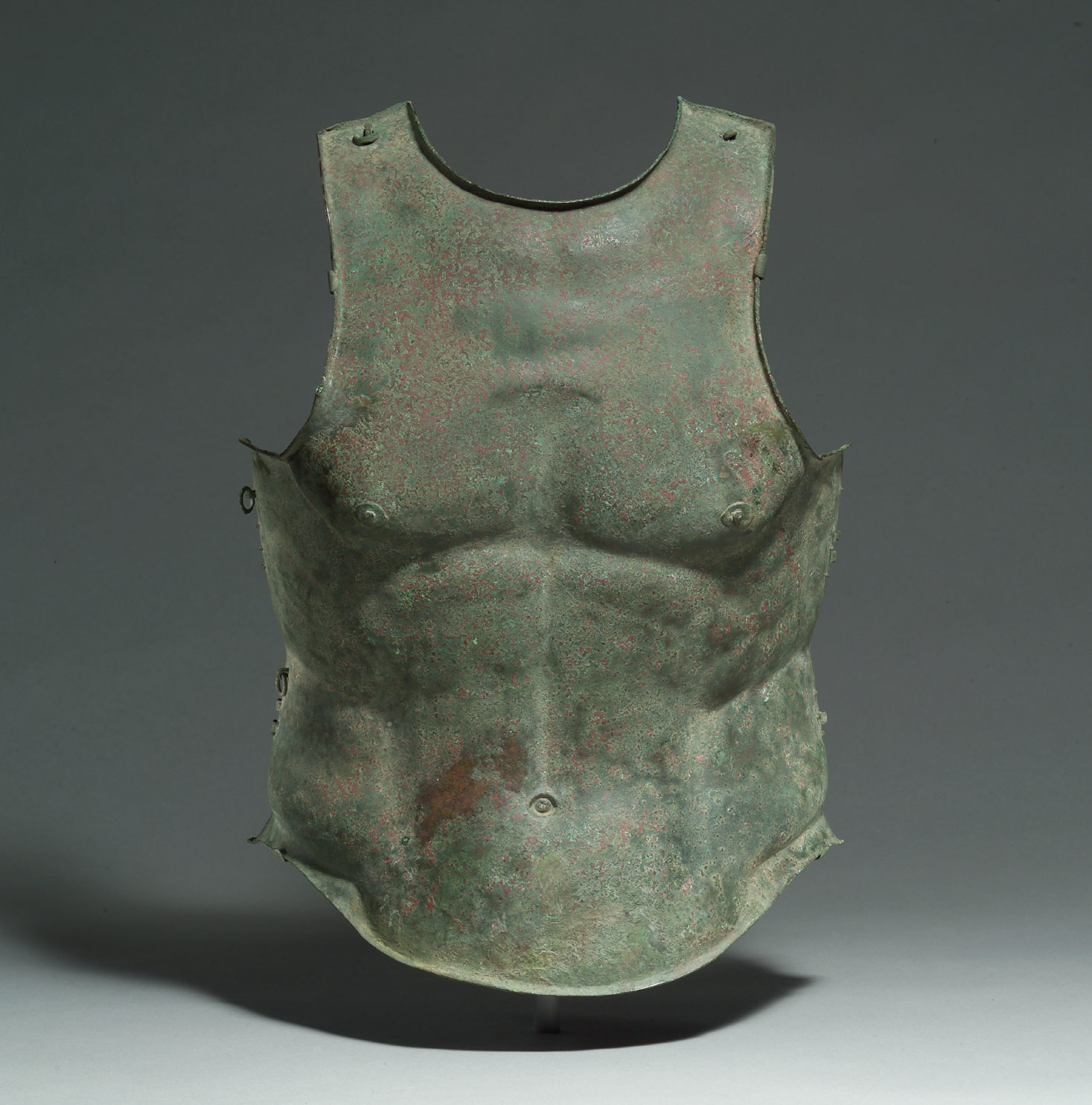
i chose this picture to relate to literature because i believe that literature is a "destructive and powerful weapon used to change and empower words." just like this ciurass, when used in a battle, it doesn't seem like it can do much help for someone, instead it just gives more weight and a hard time to carry. But because it negates damage for a warrior when he is attacked, it gives him more power to strike for an attack and deliver a finishing blow.
